Bike reuse and recycling programs in Ghana play a critical role in overcoming transportation barriers, supporting rural economies, and promoting girls’ education. Over the past year, however, many of our African partners have been experiencing some of the same challenges we are seeing here at home, forcing them to reinvent their models to keep their programs rolling.
The high cost of food and fuel makes supporting families even harder. The heaviest burden often fall on young girls who are forced to drop out of school to help care for their siblings. VBP fights back by offering bikes to struggling families to help with costs, energy levels, and time.
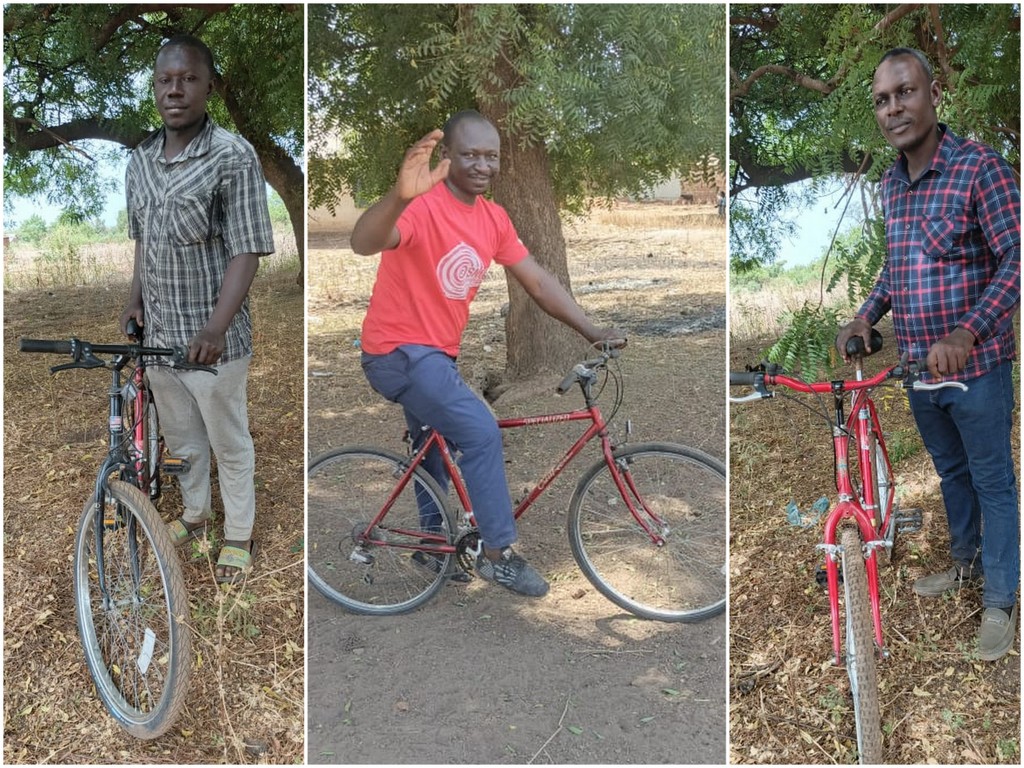
Rising transport costs are driving greater demand for bikes, bikes shops, and mechanics across rural Ghana.Tintpieng, Naapong, and Charles all received bikes through Village Bicycle Project early in 2026, before fuel costs skyrocketed. For these three, the cost of their bikes became even more valuable as transportation became more expensive over the year and purchasing power fell.
Before Tintpieng received his bike from VBP he had previously relied on paying for transportation for work and to run errands. This was costly and time consuming. Over the past year the increasing cost of fuel has driven this option out of reach for many rural Ghanaians. Tintpieng has appealed to VBP to expand the scope of their project to bring more bikes to more people, having experienced first hand the impact a bike has had on his family.
Naapong is a nurse who was traveling by foot to visit patients. His commute to work was a six hour round trip daily. He then traveled long distances to see patients throughout the day. It was exhausting and limiting on how much care he could deliver every day. He was able to purchase a bike at a low cost through the bike project, avoiding expensive at-market prices. He now saves tons of time and energy and is able to deliver life saving care to more patients every week.
Charles is a lecturer at the university and he relied on commercial transportation for his commute. At the beginning of this year Charles received a bicycle through VBP and now saves a significant amount of money on his commute. As the cost of fuel and transportation increases the benefits of owning a bike become even greater. For Charles his bike offers more independence while reducing his commuting costs and improving his punctuality.
VBP continues to offer their Learn To Ride Programs across Ghana despite the economic challenges. Shipments of bikes, from our warehouse all the way to the rural community where they end up, depends on diesel. And diesel is not cheap, especially in rural Africa. While the cost of gas greatly impacts VBP and their ability to implement their programs throughout Ghana, their steadfast support to provide bikes to students and farmers continues to offer relief even as the ability for everyone to feed and support their families becomes more challenging.